In the 2026 commodity landscape, AIS (Automatic Identification System) data is no longer just a “tracking” feed; it is the fuel for predictive logistics. By integrating AI-driven vessel intelligence into a CTRM, trading firms can move from reactive scheduling to proactive profit protection.

Here are the specific elements of AI-enhanced vessel tracking and how they boost operational capability.
1. Beyond the “Blue Dot”: AI-Predicted ETA and ETB
Traditional AIS provides a “Static ETA” entered manually by the captain. AI replaces this with a Dynamic ETA (Estimated Time of Arrival) and ETB (Estimated Time of Berthing).
* The AI Edge: Algorithms analyze historical transit times, current engine performance, real-time weather (sea state/wind), and—most importantly—port congestion.
* Operational Impact: A 12-hour difference in ETA can mean the difference between making or missing a “laycan” (loading window). AI-based ETAs allow traders to swap cargoes or renegotiate contracts before a breach occurs.
2. Port Congestion & Turnaround Analytics
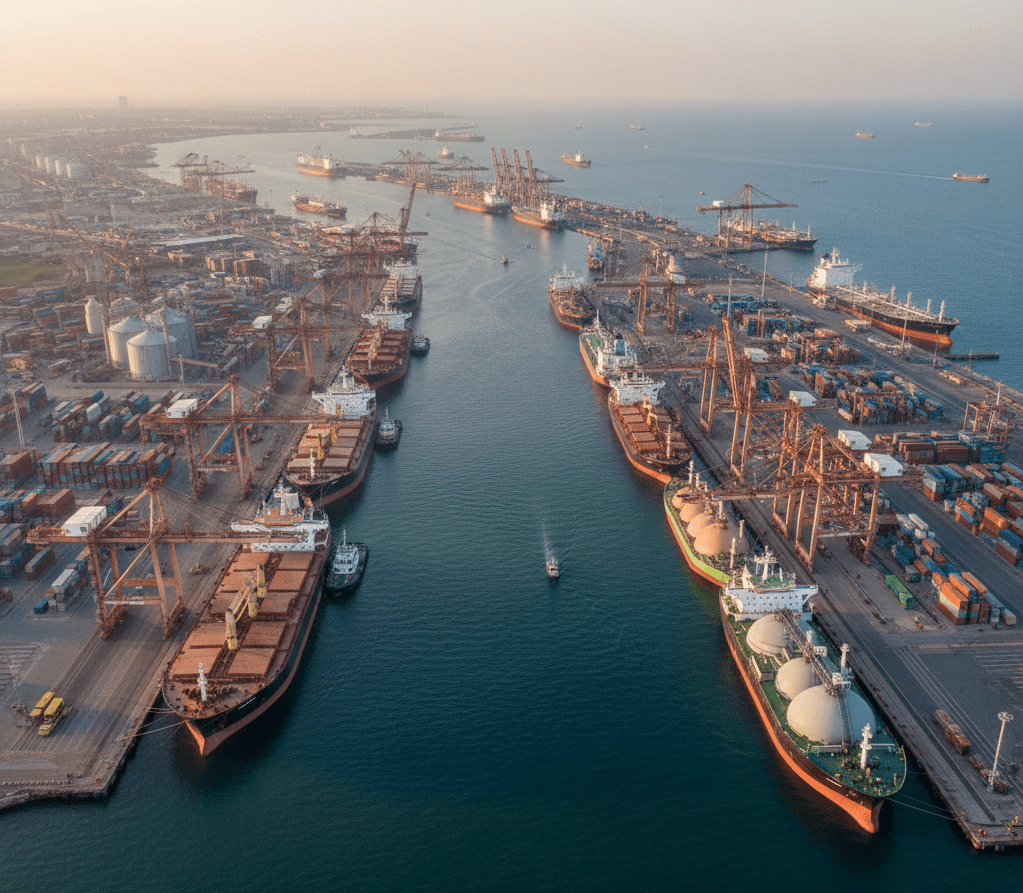
One of the biggest “black holes” in commodity trading is the time a vessel spends at anchor. AI monitors every vessel in a port to predict waiting times.
* The AI Edge: By tracking the historical “turnaround time” of specific berths and the current queue of vessels, AI can predict the ETB (Estimated Time of Berthing) and ETC (Estimated Time of Completion).
* Operational Impact:
* Demurrage Avoidance: Accurately predicting delays allows operations teams to alert customers and terminals early, potentially saving thousands of dollars in daily demurrage fees.
* Blending Operations: For oil and grain, precise arrival times are critical for coordinating “just-in-time” blending at the terminal.
3. Dark Ship Detection & Geofencing
AI can identify “non-cooperative” behavior that simple AIS feeds might miss, which is vital for compliance and security.
* The AI Edge: AI detects “Dark Activity” (when a vessel turns off its AIS transponder) by cross-referencing AIS signals with Synthetic Aperture Radar (SAR) satellite data.
* Operational Impact: * Compliance: Automatically flags if a vessel enters a sanctioned zone or performs a ship-to-ship (STS) transfer in an unauthorized area.
* Supply Chain Integrity: Confirms the origin of the commodity, ensuring it hasn’t been co-mingled with restricted products.
4. Virtual Lead-Time Optimization
By integrating AIS data directly into the CTRM’s Supply & Demand balance, AI can create a “Virtual Pipeline” of commodities.
* The AI Edge: AI calculates the “Total Volume on Water” for a specific commodity (e.g., Iron Ore heading to China) and updates the global balance sheet in real-time.
* Operational Impact: If three vessels are delayed by a storm in the Atlantic, the AI automatically adjusts the “Expected Inventory” at the destination port, triggering a “Buy” signal for the trader to cover the short-term gap from a local source.
Finally all that info in a easy table.
| Capability | Traditional Tracking | Ai-Enhanced Tracking |
| Arrival Accuracy | Relies on Manual Inputs; high error | 95%+ accuracy using ML on weather/traffic. |
| Port Delays | Reactive (find out when you arrive). | Predictive (know the queue 5 days out). |
| Route Selection | Fixed or weather-routed only. | Profit-optimized (balancing fuel, time, and market price). |
| Risk Detection | Manual monitoring of geofences. | Automated alerts for “dark activity” or route deviations. |
Thank you all for the motivation for me to write and share the ideas to the world!!
 AnalystGuru - Everything Analysis