
Pretty debatable questions isnt’?
pro-cras-ti-na-tion |prəˌkrastəˈnāSHən, prō-|
noun
the action of delaying or postponing something
A note to the readers:
I’m not a professional at any of this, just a lifelong procrastinator who thinks about this topic all the time. I’m still in a total battle with my own habits, but I have made some progress in the last few years, and I’m drawing my thoughts from what’s worked for me.
Procrastinators love planning, quite simply because planning does not involve doing, and doing is the procrastinator’s Kryptonite.
From the childhood we would have heard this word from parents, teachers, coaches and over the period now from our wife and our bosses too.
Is that really a problem?
Well, yes as in a luxury and technology filled world it is very easy to become detached from our core values and important things in life. Eventually start to give priority to materialistic and superficial things: objects, material wealth, acquisition and appearance.
For the Have-To-Dos in my life, I’ll end up waiting until the last minute, panicking, and then either doing less than my best work or shutting down and not doing anything at all. For the Want-To-Dos in my life, let’s be honest—I’ll either start one and quit or more likely, I just won’t ever get around to it. Weight loss and exercise everyday has been a common to do list, new year resolution almost for a decade for me now and I have been failing.
So what is a typical procrastinators problem?
The procrastinator’s problems run deep, and it takes something more than “being more self-disciplined” or “changing his bad habits” for him to change his ways—the root of the problem is embedded in his day to day Storyline, and his Storyline is what must change.
Before we talk about how Storylines change, let’s examine, concretely, what the procrastinator even wants to change into. What do the right habits even look like, and where exactly will the procrastinator run into trouble?
There are two elements of being able to achieve things in a healthy and effective manner—planning and doing. Let’s start with the easy one:
Planning:
Being a procrastinator when i plan, i realized that i have been doing it in a vague way that doesn’t consider details or reality too closely, and this planning leaves me perfectly set up to not actually accomplish anything. So underlying learning is a procrastinator’s planning session leaves him with a doer’s nightmare.
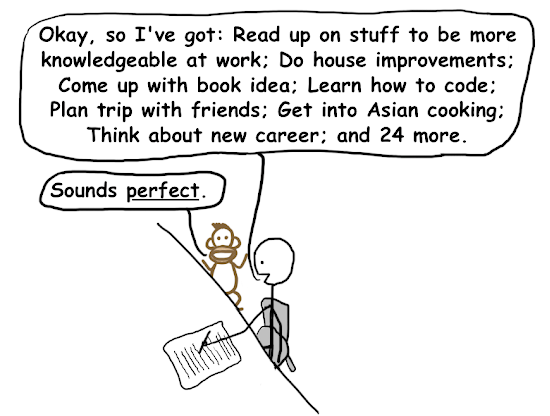
A big list of vague and daunting things makes the Instant Gratification Monkey( that lovely pet sitting next to me) laugh. When we make a list like that, the monkey says, “Oh perfect, this is easy.” Even if your conscious mind believes it intends to accomplish the items on that list in an efficient manner, the monkey knows that in your subconscious, you have no intention of doing so.
Effective planning, on the other hand, sets you up for success. Its purpose is to do the exact opposite of everything in that sentence.
More deep dive into planning and doing this in my part 2. Watch this space for more…..
 AnalystGuru - Everything Analysis